Paralympic Games
Latest News
No Posts Found! Sorry, but nothing matched your selection. Please try again with some different keywords.
Inside Paralympic Games
About
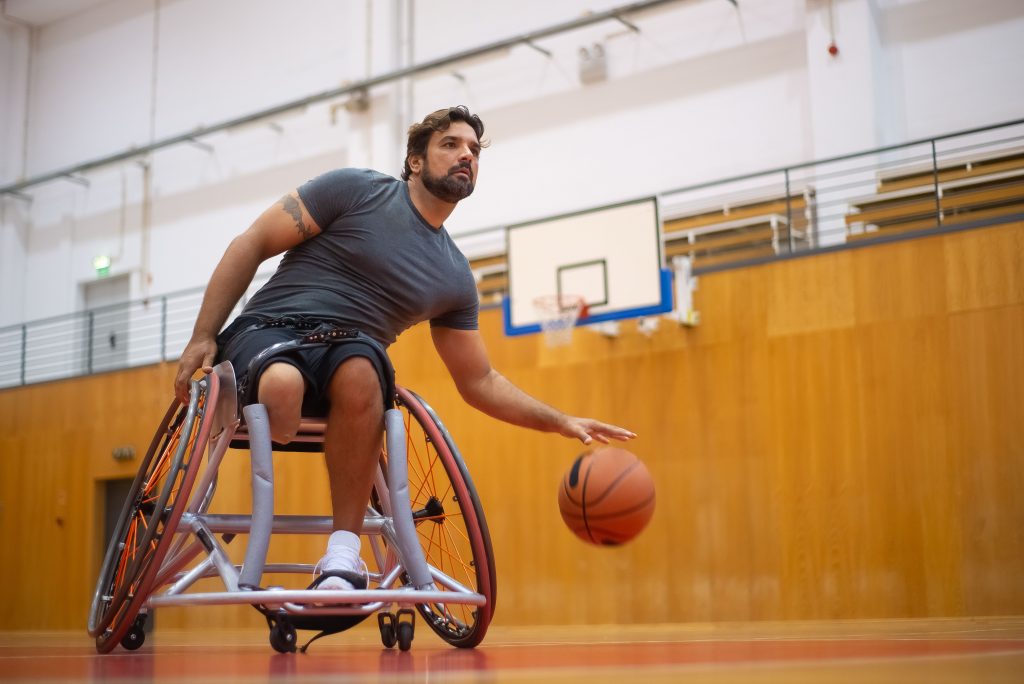
The Paralympic Games are a major international multi-sport event for athletes with physical disabilities or intellectual impairments. This includes athletes with mobility disabilities, amputations, blindness, and cerebral palsy. Paralympic sports refers to organized competitive sporting activities as part of the global Paralympic movement. These sports are organized and run under the supervision of the International Paralympic Committee and other international sports federations. The Paralympic sports comprise all the sports contested in the Summer and Winter Paralympic Games. As of 2016, the Summer Paralympics included 22 sports and 526 medal events,[1] and the Winter Paralympics include 5 sports and disciplines and about 72 events. The number and kinds of events may change from one Paralympic Games to another.
Disability Categories
Athletes who participate in Paralympic sport are grouped into ten major categories, based on their type of disability:
Physical Impairment – There are eight different types of physical impairment recognized by the movement:
Impaired muscle power – With impairments in this category, the force generated by muscles, such as the muscles of one limb, one side of the body or the lower half of the body is reduced, e.g. due to spinal-cord injury, spina bifida or polio.
Impaired passive range of movement – Range of movement in one or more joints is reduced in a systematic way. Acute conditions such as arthritis are not included.
Loss of limb or limb deficiency – A total or partial absence of bones or joints from partial or total loss due to illness, trauma, or congenital limb deficiency (e.g. dysmelia).
Leg-length difference – Significant bone shortening occurs in one leg due to congenital deficiency or trauma.
Short stature – Standing height is reduced due to shortened legs, arms and trunk, which are due to a musculoskeletal deficit of bone or cartilage structures.
Hypertonia – Hypertonia is marked by an abnormal increase in muscle tension and reduced ability of a muscle to stretch. Hypertonia may result from injury, disease, or conditions which involve damage to the central nervous system (e.g. cerebral palsy).
Ataxia – Ataxia is an impairment that consists of a lack of coordination of muscle movements (e.g. cerebral palsy, Friedreich’s ataxia).
Athetosis – Athetosis is generally characterized by unbalanced, involuntary movements and a difficulty maintaining a symmetrical posture (e.g. cerebral palsy, choreoathetosis).
Visual Impairment
Intellectual Disability
Sports Associations Details
National Paralympic Committe
- Registration Number –37
- Year of Registration –28.09.1994
- Gazette Notification – Gazette No.1990/23 – 27.10.2016
- Tenure of the Association –02
Ø PRESIDENT
Lt. Col. Deepal Herath
184/5, Suriyagama, Kadawatha
0773404687
0762390916
deepal.herath@yahoo.com
Ø SECRETARY
Colonel Bandula Bandara
No. 570/6, Darshana Mawatha, Kandaliyaddapaluwa, Ragama.
0773826732
0711933013
bbandula@yahoo.com
Mrs. P.M.N.D.K. Variyapola
365/A/1, Gangabada Road, Medagama, Bandaragama
077 733 67 35
dilini.wari@gmail.com
- List of Affiliated Associations–
- District Sports Associations –01
- Subsidiaries/ Societies –52
- Organization of Islamic Disabled
- Rehab Lanka Sports Club
- School for the Blind
- Sri Lanka Blind People’s Service Board
- Gamunu Hewa Regiment Board
- Lion Regiment Sports Club
- Sri Lanka Infantry Sports Club
- Gajaba Regiment Sports Club
- Commando Regiment Sports Club
- Social Services Vocational Training Center – Wattegama
- Social Services Vocational Training Center – Seeduwa
- Social Services Vocational Training Center – Katawala
- Social Services Vocational Training Center – Agunakolapalassa
- Social Services Vocational Training Center – Amunukumbura
- Navy Sports Club – Welisara
- Ashokapura Sports Club
- Vijayabahu Sports Club
- Sukhita Women Vocational Training Centre
- Sri Lanka Visually Impaired Cricket Association
- Sri Lanka Deaf Cricket Association
- Ranaviru Apparel Sports Club
- Association of Susumna Handicapped
- Sri Lanka National Defense Forces Sports Club
- Special Forces Mobilization Sports Club
- Pritipura Nursing Home
- Anandapura Sports Club
- Sumaga Sports Club
- Disabled Sports Club – Siripura
- Our Children Organization
- Dayamina Sports Organization
- Association of Disabled Technicians
- Surd Sports Association
- Disability and Development Resource Group Sports Club
- Ragama Rehabilitation Hospital Sports Club
- Colombo Para Sports Club
- Isuru Sports Club
- Uva Wellassa Sports Club
- Sri Lanka Deaf Sports Club
- Veterans Service Authority
- Sri Lanka Physically Challenged Cricket Association
- Athugalpura Sports Club (North Western Province)
- Serik Sports Club
- Varodi Sports Club
- Western Province Special Education Sports Club
- Matale Swashakti Sports Club
- Sri Lanka CP Football Federation
- Sri Lanka Para Dancing Sports Club
- Judo Sports Club
- Sri Lanka National Para Rowing Club
- Cerebral Palsy Lanka Foundation
- Heroes Sports Club
- Organization of Sports and Welfare of Persons with Disabilities
- All
- 2026
- 2025
- 2024

- All
- 2026
- 2025
- 2024